Insurance Claim Denied Due to Lack of Maintenance: Legal Rights and Defence
The Feared Loss Adjuster's Notice: When a Sudden Incident Becomes an Accusation of Neglect
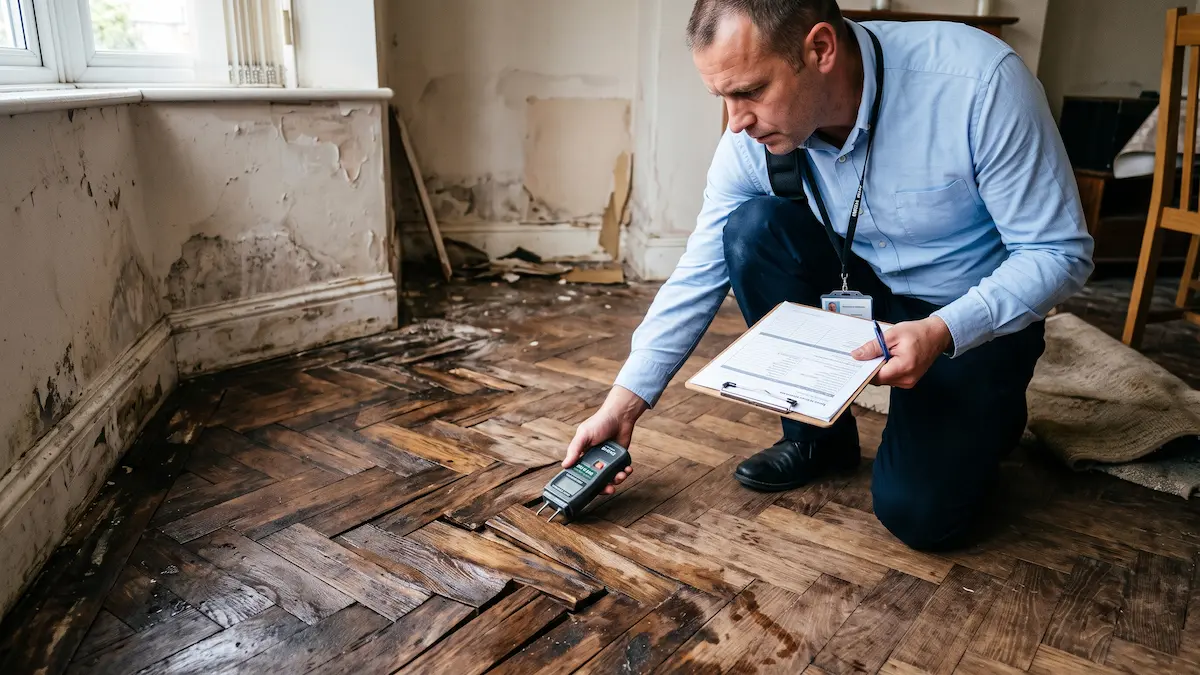
Picture the scene: a pipe bursts at home, water ruins the living room parquet flooring, and after the initial shock, you breathe a sigh of relief thinking: "Thank goodness I have insurance". You notify the company, the loss adjuster visits, and within days you receive the dreaded letter: claim denied due to lack of maintenance.
Across the insurance industry, claim rejections under this clause represent one of the primary sources of policyholder dispute, financial stress, and legal appeals. What is an unforeseen, sudden accident from the insured's perspective is frequently characterized by insurers as the inevitable outcome of prolonged property neglect.
Where exactly does ordinary wear and tear end and a compensable insured loss begin?
The Contractual Basis: What Policies Actually Cover and Exclude
To understand the dispute, one must examine the fundamental principles of the Insurance Contract Act. By law, policies are underwritten to cover perils meeting three essential criteria: they must be uncertain, future, and unforeseen.
A burst pipe resulting from a sudden water pressure surge is an indisputable insurance claim. Conversely, slow seepage through a silicone joint that has deteriorated over years is not: forensic loss adjusters classify this as an ordinary, predictable physical degradation over time.
Property policies routinely exclude damages caused by:
- Ordinary wear, tear, and mechanical deterioration resulting from normal usage.
- Progressive oxidation, corrosion, or pitting in piping systems.
- Apparent failure to carry out timely repair and maintenance work.
The contract expects the insured to act with reasonable prudence. However, abuse arises when insurers utilize "lack of maintenance" as an arbitrary, catch-all defence to reject valid, sudden claims.
Common Rejection Scenarios
Alleged maintenance failures rarely show obvious symptoms beforehand; they surface when the claims adjuster investigates the physical root cause:
- Plumbing and Wet Areas: Damp patches on adjacent walls caused by cracked shower tray sealant or failed tile grouting that leaks imperceptibly during daily use.
- Roofs and Terraces: Water ingress following severe rainfall where the insurer claims gutters were blocked with debris or waterproofing membranes had exceeded their functional lifespan.
- Electrical Wiring: Short circuits or fires originating from outdated fuse boards lacking residual current devices (RCDs) or subjected to persistent overloads.
The Financial Fallout: The Double Loss
When a claim is declined on maintenance grounds, the financial burden on the property owner is twofold:
- Repairing the Origin: The direct cost of fixing the primary leak is always the owner's responsibility (a policy never pays to replace an old pipe or re-seal a shower).
- Consequential Damages (the major risk): Deeming the root cause negligent, insurers frequently decline to cover resulting damage. This leaves the homeowner personally responsible for restoring damaged ceilings in neighbouring properties and replacing their own ruined flooring.
Supreme Court Jurisprudence: The Burden of Proof
There is a fundamental legal principle protecting policyholders: the burden of proof rests entirely on the insurer.
According to established judicial precedent, an insurance carrier cannot dismiss a claim based on mere speculation or the general age of the installation. The insurer must provide conclusive, rigorous technical evidence demonstrating that the damage was exclusively and directly caused by gross failure of upkeep, rather than a sudden, accidental incident.
An older property has every legal right to full insurance coverage against accidental perils unless definitive, causative neglect is formally proven.
Action Protocol for Unjustified Claim Denials
If you receive an unjustified rejection letter, follow this formal procedure:
- 1. Request the Complete Adjuster's Report: You have a contractual and statutory right to receive the full technical adjustment file, including all photographic evidence and measurements.
- 2. Commission an Independent Counter-Report: If the event was sudden, an independent appraisal by a chartered surveyor or court-appointed insurance expert is vital to rebut the insurer's findings.
- 3. File Formal Complaints with the SAC and DGSFP: Lodge a formal complaint with the insurer's Customer Ombudsman (Servicio de Atención al Cliente - SAC). If dismissed or unanswered within the statutory timeframe, escalate the file directly to the Directorate-General for Insurance and Pension Funds (DGSFP).
Would you like a technical audit or a tailored policy review?
Oliver Ayala Becker • Insurance Broker DGSFP F-3165
Discussion Threads & Queries
0 comments